
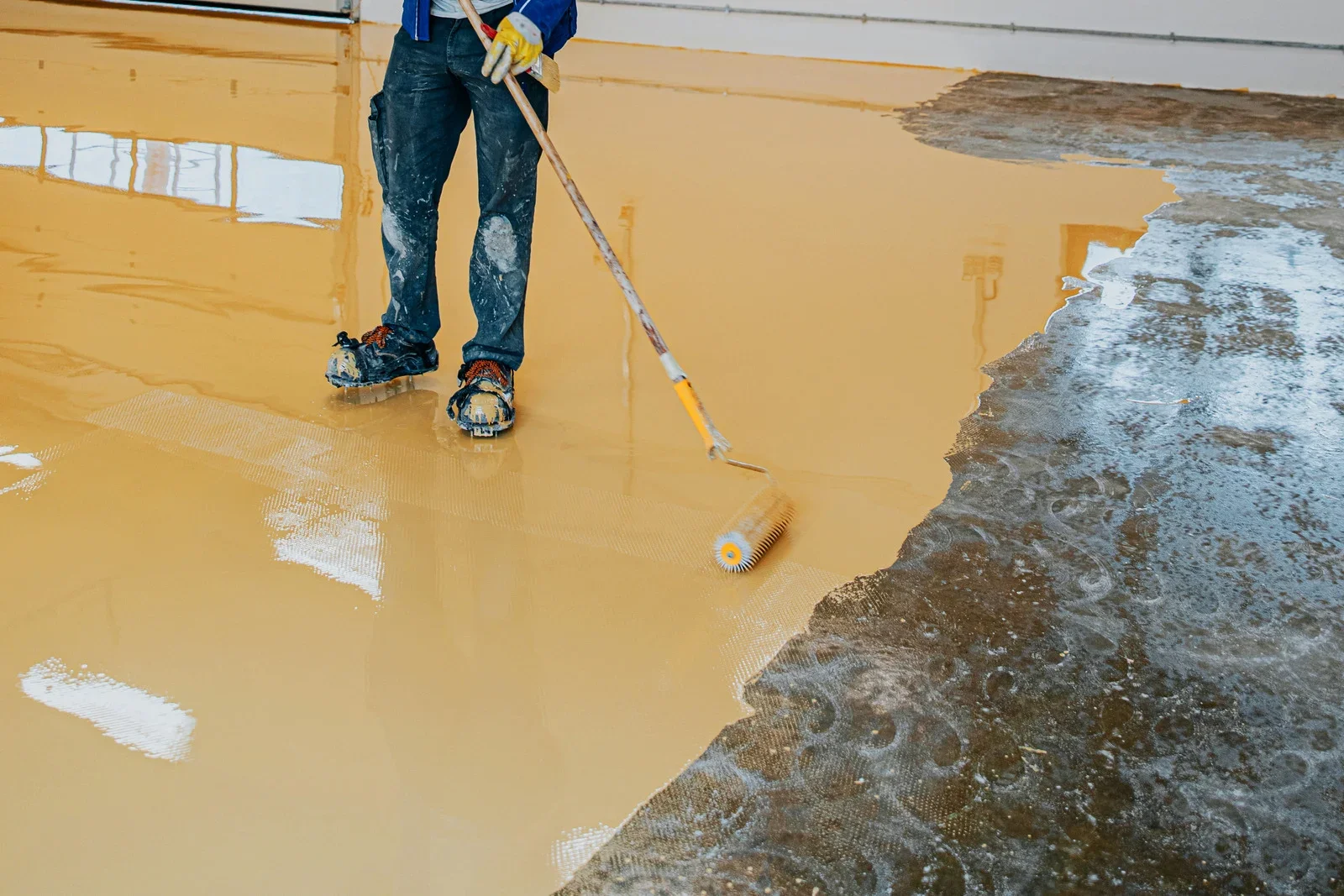
Epoxy Floor Coating in Hialeah, FL
An epoxy floor coating fails or succeeds in the prep, not the topcoat. The difference between a finish that holds for ten years and one that peels in two has almost nothing to do with the product label — it has everything to do with whether the concrete was diamond-ground to the correct CSP profile, whether moisture vapor was tested, and whether cracks were treated before coating began.
Epoxy Floor Coating Technical Details Worth Knowing
Below is the technical depth that separates a floor that holds for a decade from one that fails in two.
Concrete surface profile (CSP) and prep method
Epoxy bonds to concrete via mechanical interlock with surface roughness. The ICRI CSP scale ranges from 1 (smoothest, polished) to 9 (roughest, heavy aggregate). Most epoxy systems require CSP 2-4 - achieved by diamond grinding with appropriate grit pads. Acid-etch produces CSP 1 at best and doesn't give the mechanical profile epoxy needs to bond reliably. Diamond grind is the right method on every residential and most commercial floors.
Concrete moisture vapor emission testing
Concrete slabs continuously emit water vapor - especially in Florida where ambient humidity drives moisture into porous concrete. Testing methods include calcium chloride (ASTM F1869) and relative humidity probe (ASTM F2170). Most epoxy products specify maximum 3-5 lbs/1,000 sf/24 hours vapor emission for bond reliability. Slabs above threshold need moisture mitigation primer (epoxy moisture vapor barrier) before the standard system goes down.
Polyaspartic vs standard epoxy chemistry
Standard epoxy is a thermoset polymer with 72-hour full cure. Polyaspartic is a polyurea variant with 8-12 hour walkable cure and 24-48 hour full cure - and UV-stable, where standard epoxy yellows under UV exposure. Polyaspartic costs more per gallon but the labor savings from faster cure often offset the material premium on residential garage projects. We discuss the trade-off at the estimate.
Flake (chip) broadcast technique
Flake systems broadcast colored vinyl chips into wet base coat. Light broadcast covers about 30% of the surface; full broadcast (to refusal) covers 100% with chips. We over-broadcast and sweep off the excess for full coverage, then topcoat with clear epoxy or polyaspartic. The chip system hides minor concrete imperfections and adds slip resistance.
Metallic epoxy and skim-trowel technique
Metallic epoxy uses pigment-laden topcoat applied with a magic-trowel or skim-trowel to create flowing marbled patterns. Each application is unique - no two metallic floors look the same. Done well, the result is dramatic and high-end. Done badly, the metallic pigment lays flat without depth. Application requires practice and patience.
Crack and joint treatment before coating
Concrete cracks under 1/8 inch get polyurea crack-fill - cures fast and remains flexible. Wider cracks need epoxy crack-fill with embedded mesh tape. Control joints (the deliberate cuts to control crack location) get semi-rigid joint filler. Expansion joints (full-depth gaps to allow slab movement) are typically left exposed and edged carefully. Coating over un-treated cracks causes the new finish to crack along the same lines within months.
Local Conditions That Affect Epoxy Floor Coating in Miami-Dade
Florida and Miami-Dade conditions shape epoxy projects. The seven items below come up on most jobs.
South Florida humidity and concrete moisture vapor
South Florida concrete slabs often carry higher moisture vapor emission than slabs in dry climates - especially garage floors over un-encapsulated soil. Coating an epoxy system over a moisture-emitting slab causes bubbling, peeling, and complete coating failure within months. We test moisture vapor where conditions warrant and apply moisture-mitigation primers where needed.
Hialeah and Hialeah Gardens garage age
Many Hialeah and Hialeah Gardens garage slabs are 40-60 years old. Old slabs often have prior coatings (some failed), surface cracks from settlement, and contamination from decades of oil drips. We assess each slab honestly - sometimes a full restoration is the right call, sometimes a strip-and-re-prep is enough.
Hurricane flooding cleanup before coating
After tropical storms and hurricanes, garage floors flood with stormwater that leaves silt and contamination. Coating over a recently-flooded slab without proper cleanup traps contaminants under the epoxy. We pressure-wash, allow full dry time, and re-test moisture before coating begins.
Commercial industrial scope in Doral and Medley
Doral, Medley, and Hialeah Industrial corridor have a dense concentration of warehouse and light-industrial buildings. Epoxy floors in these facilities take heavier traffic, chemical exposure, and forklift wear than residential. We spec heavier-mil systems (20-40 mils total dry) with quartz or heavy-flake broadcast for these applications.
Salt-air coastal pool-equipment floors
Coastal homes in Coral Gables and Coconut Grove have pool-equipment rooms with chlorine, acid, and salt-air exposure. Standard epoxy fails in these environments within 3-5 years. We use chemical-resistant epoxy systems with specialty topcoats for these applications.
Restaurant kitchen and food-service compliance
Restaurants in Hialeah, Doral, and across Miami-Dade need FDA-compliant floor coatings that resist grease, support sanitation, and provide slip resistance per local health code. We use quartz-broadcast or heavy-flake systems with chemical-resistant topcoats for restaurant kitchens.
Bilingual project communication
Three of every four inbound calls in Spanish. Walk-through, estimate, scheduling, and warranty all available in Spanish.
Reference Pricing in Miami-Dade
All prices from written estimates after a free walk-through. Final price depends on scope, substrate condition, and product spec.
Miami-Dade Reference Pricing
Written estimates only — brand spec named, no verbal quotes. Final price from your free walk-through.
| Scope / Service | Price Range |
|---|---|
| Residential single-bay garage (250-350 sf) | $1,250-$2,450 |
| Residential double-bay garage (450-550 sf)$2,150-$3,950 solid color | $2,150-$3,950 |
| Three-car or oversized garage (700-900 sf)$3,250-$5,950 standard | $3,250-$5,950 |
| Per-square-foot ratesSolid: $4.50-$7.50/sf | $4.50-$7.50/sf |
| Commercial / industrial floors (1,000-5,000 sf)$4.00-$6.50/sf solid or light flake | $4.00-$6.50/sf |
| Concrete repair add-onsSurface crack fill included | $2.50-$5.50 per linear |
| Polished concrete (alternative)$5.50-$11.00/sf for mechanical polish + densifier - no coating, polished concrete become… | $5.50-$11.00/sf |
Free walk-through. Written estimate within one business day.
No trip charge · No pressure · English or SpanishCommon Questions About Epoxy Floor Coating in Hialeah
How much does epoxy floor coating cost in Hialeah?
How long does an epoxy floor project take?
How long before I can drive on my new floor?
Do you do flake or metallic finishes?
What's the difference between standard epoxy and polyaspartic?
Will the epoxy peel after a few years?
Can you do commercial warehouse floors?
What about my existing garage floor with cracks?
Do I need to move my cars and storage before you arrive?
What's the warranty?
Contact Vinicio Painting for a Free Estimate.
One call — Yohan answers. Free walk-through, written estimate within one business day. English or Spanish.