
How Many Coats of Paint Does a Wall Really Need?
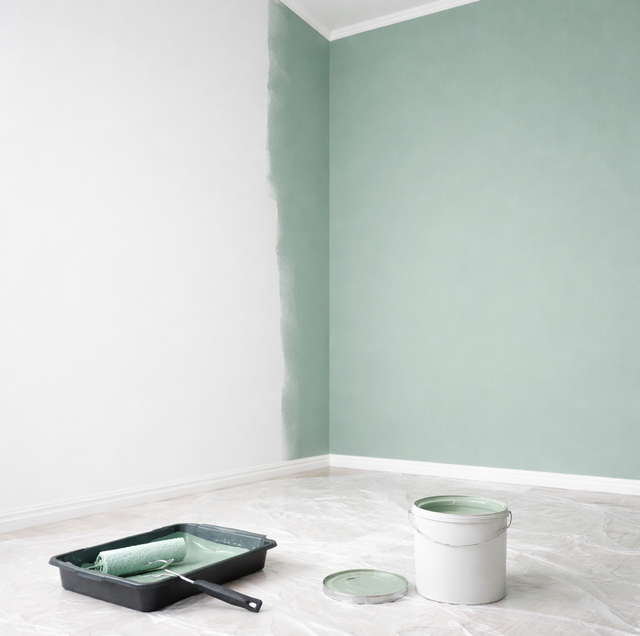
Quick Answer: Most walls need two coats for full coverage, uniform sheen, and a film thick enough to last. You need more than two when you are making a dramatic color change, painting a deep or hard-hiding color, or covering stains and fresh drywall. One coat can work only when you are repainting over the same or a very similar sound color with a quality self-priming paint. Primer, when the surface calls for it, counts as its own separate step.
Roll one coat onto a wall, step back while it is still wet, and it can look done. Come back an hour later, and the story changes: faint streaks where the roller overlapped, a thin patch near the trim, an odd shift in shine when light rakes across the surface. That gap between "looks covered" and "actually finished" is the whole reason the question of coat count matters. The honest default for a durable, even wall is two coats. The real answer, though, depends on what you are covering and what you are covering it with.
Why Two Coats Is the Standard
A single coat rarely fails because of color. It fails because of film. Paint does more than tint a wall; it lays down a continuous protective layer, and one pass rarely builds that layer evenly.
Watch what one coat leaves behind. Roller and brush strokes do not deposit paint in a perfectly uniform sheet. Some areas get slightly more, some slightly less, and where the film runs thin the old surface reads through as a faint ghost. Painters call the uneven, patchy look flashing, and it shows up worst where a roller meets a brushed edge or where the wall soaked up paint faster in one spot than another. A wall can be fully "colored" and still look blotchy in raking light because the sheen is not consistent across the surface.
The second coat is what fixes all of that at once. It fills the thin spots, evens out the sheen so the whole wall reflects light the same way, and builds the dry film to the thickness the manufacturer designed the product around. That film thickness is not cosmetic. It is what lets the finish stand up to washing, scuffing, and years of hands and furniture without wearing through. Two coats is the norm because it is the point where coverage, uniform sheen, and durability all land together.
When a Wall Needs More Than Two
Some jobs ask for a third coat, and pushing back against that to save time usually shows up later as a wall that never looked quite right.
Dramatic color changes: Going from a dark wall to a light one, or the reverse, is the classic case. Light paint over a dark base struggles to bury the old color, and two coats can still leave it looking cloudy or muddy. A tinted primer, matched toward the new color, does most of the heavy lifting here and can save you from chasing coverage with endless finish coats.
Deep and hard-hiding colors: Reds, deep yellows, bright oranges, and some strong blues are notoriously poor at hiding. The pigments that make those colors vivid do not block the surface underneath well, so the base keeps peeking through. These often need a gray-tinted primer plus two or three finish coats to reach a solid, even tone.
Covering stains, and covering them the right way: Water rings, smoke, marker, grease, and tannin bleed from wood knots will keep ghosting up through ordinary paint no matter how many coats you pile on. The fix is not more coats; it is the right primer. A stain-blocking primer seals the mark so it stops migrating, and any real moisture source has to be found and repaired first. Burying a live leak under fresh paint hides the symptom for a few weeks and lets the damage keep spreading behind the wall.
Porous, patchy, or brand-new surfaces. New drywall, fresh joint compound, and bare patched areas drink paint unevenly. Repaired spots often "flash" against the surrounding wall even after two coats because the patched area absorbs differently. Priming first evens out that absorption, and you may still want a full second finish coat over the primer.
For a dramatic color change, a tinted primer matched toward the new color does most of the heavy lifting and can save you from chasing coverage with extra finish coats. For deep, hard-hiding colors like reds and bright oranges, a gray-tinted primer under the finish helps the color reach a solid, even tone.
When a Single Coat Might Actually Do
There is a narrow lane where one coat is honest, not lazy. It applies when three things line up: the wall is sound and clean, the new color is the same as or very close to the existing color, and you are using a quality self-priming paint made to build enough film in one pass.
Think of a repaint on a hallway that already wears a soft warm white, using the same soft warm white in a good paint-and-primer product. There is no color to bury and no new surface to seal, so one carefully applied coat can restore the finish. The catch is that "one-coat" only holds when you resist stretching the paint. The moment you spread it thin to make the gallon go further, you are back to flashing and thin spots, and you will be rolling a second coat anyway.
Why Primer Is Its Own Step, Not a Coat
It helps to stop counting primer as one of your "coats" of paint. Primer and finish paint do different jobs. Primer's job is adhesion and sealing, giving the finish something to grip and stopping the surface from sucking paint in unevenly or bleeding stains through. Finish paint's job is color, sheen, and protection.
Bare drywall, raw wood, fresh patches, glossy surfaces you have scuffed, and stained areas all want a primer before any finish goes on. On those surfaces, primer plus two finish coats is a normal, correct sequence, not overkill. Skipping it to save a step is the fastest way to end up with peeling, uneven color, or stains that resurface a month later.
How Paint Quality and Color Change the Math
Not all gallons hide the same. A higher-grade paint carries more pigment and binder per gallon, so it lays down a more opaque film and reaches full coverage in fewer passes. A budget paint is thinner on solids, which is a big reason a cheap gallon can leave you rolling a third coat to reach what a better paint would have done in two. The cheaper paint rarely saves what it promises once you count the extra coat and the extra hours.
Color matters as much as grade. Mid-tone and darker neutrals over a similar base cover easily. Very light colors over dark walls, and saturated colors of any brightness, cover the worst. This is exactly where "one-coat" and "paint-and-primer" claims on the can get oversold. Those products truly help on same-color repaints of sound walls, but for a real color change or a poor-hiding color, most still need two coats to look right. The label is describing a best case, not a promise for every wall.
Application: The Coat You Rush Is the Coat That Fails
Coat count only works if each coat goes on right. Two properly applied coats beat three rushed ones every time.
Spread the paint at the thickness the product is designed for. Stretching a coat too thin to cover more wall defeats the purpose, since a thin coat is exactly what leaves flashing and forces another pass. Just as important, let each coat dry the full recommended recoat time on the label before adding the next.
If you are working on a home built before 1978, test for lead before you sand or scrape, since disturbed lead paint is a health hazard. Keep the room ventilated while paint dries, and set up ladders on stable footing.
Frequently Asked Questions
Not really, but it changes how you get there. A sprayer atomizes paint into a fine, even mist that lays down a very uniform layer, which reduces the roller-and-brush flashing that makes a single coat look patchy. Even so, sprayed work almost always gets back-rolled or back-brushed to press the paint into the surface, and most sprayed walls still take two coats for full film build and durability. The sprayer improves evenness, not the physics of how much film a wall needs.
Follow the recoat window printed on the can, since it varies by product and conditions, but a common range for interior latex is two to four hours before recoating. Two numbers get confused: "dry to the touch" comes first and does not mean ready to recoat. Cooler air and slower airflow stretch the wait longer. If you recoat before the first coat has cured enough, you risk pulling it up with the roller, so when in doubt, give it the longer end of the window.
Up to the film thickness the product is engineered for, yes, which is why the second coat matters. Past that point, piling on extra coats gives you little added protection and can actually work against you. An overly thick, over-built paint layer is more prone to cracking and can take much longer to fully cure. Two solid coats hit the durability the paint was designed to deliver; a fourth or fifth coat is wasted paint.
Usually yes, and ceilings punish thin coverage more than walls because overhead light rakes across them and exposes every missed spot and lap mark. Flat ceiling paint is formulated to hide unevenness, but a single coat over a repaired or previously stained ceiling almost always flashes. Water stains on a ceiling in particular need a stain-blocking primer first, or the ring will bleed back through the fresh white.
It is not a good idea to switch sheens mid-job to fine-tune the look. The two coats should be the same product and sheen so the film cures and reflects light uniformly. Layering a different sheen on top can leave the surface looking inconsistent and can affect how the coats bond. If you want a different sheen than what is already on the wall, prime or use a bonding coat suited to the existing finish, then apply your chosen sheen in full.
Conditions do not change the count, but they change whether your coats succeed. Most interior paints are formulated to be applied within a manufacturer-stated range, often around 50 to 85 degrees, and painting far outside that range can cause poor flow and weak film formation that tempt you into extra coats to compensate. Keep the room within the label's range and let air move gently, and each coat will cover the way the product intends regardless of the time of year.
Book a walkthrough for a wall that covers evenly the first time — no flashing, no thin spots, no do-overs. Vinicio Painting serves Doral, Coral Gables, and Miami. Call (866) 444-1226.
