
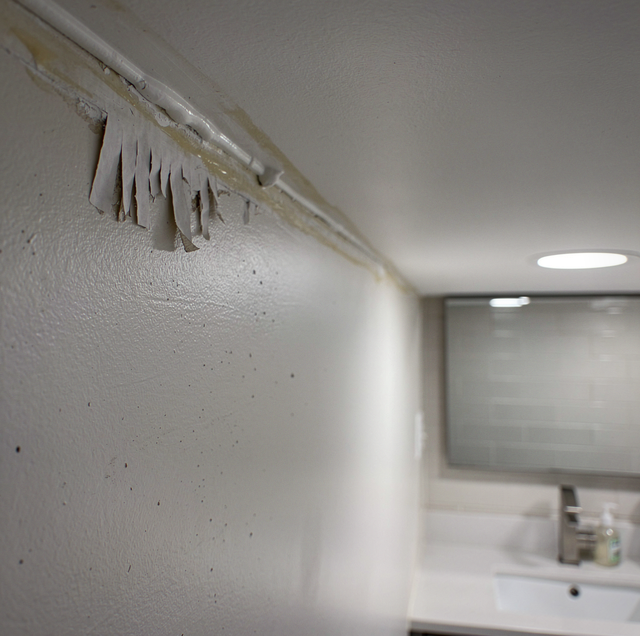
Fresh paint is a smooth, unbroken film, and that is why it can sit over a wet wall or ceiling for a while without giving anything away. A paint coat does not soak up water the way the drywall or plaster underneath does, so the surface can look and feel normal even after moisture has been working on the material behind it. What eventually shows through the paint, whether it is a stain, a soft patch, or a smell, means water has already reached the material under it. Each of those signs is paired here with what is happening out of sight.
| What You See or Feel | What Is Likely Happening Behind the Paint |
|---|---|
| A yellow-brown ring or tide line | Water spread through the material and dried there, leaving mineral and tannin residue at the outer edge |
| Bubbles or blisters that feel soft | The paint film has separated from a saturated surface underneath |
| Peeling starting at a ceiling corner | Water is collecting at a low point where two planes meet and soaking the paper facing there first |
| A wall that feels cool or soft to the touch | The material behind the paint is currently holding moisture |
| A musty smell at one spot | Mold or mildew is growing on material that has not dried out |
| Hairline cracks with staining alongside them | The wet section of drywall is weakening where it has stayed damp |
Stains That Bleed Back Through Paint
A water stain is one mark that ordinary wall paint does not hold down: a color coat over it lets the discoloration show through again. A stain-blocking primer goes on first and seals the mark in before any finish coat.
Bubbling and Soft Spots
A bubble under interior paint forms when something pushes the film off the surface it was meant to grip. Over a leak, that push is moisture coming from the material behind the paint, and it shows up alongside the other signs here, while a blister from poor prep or a humid painting day does not come with a stain or a soft wall. Where nothing has visibly bubbled yet, a soft spot on its own can mean the same process is already underway just beneath the surface, since the material beneath the paint can begin to lose its bond before the top film shows any separation. A patch that feels cooler than the wall around it is picking up on the same problem from a different angle: standing moisture pulls heat away as it evaporates, so a chronically damp section reads cooler to a bare hand than the dry paint beside it. Over a leak, a blister that has broken and dried into a crumbling patch can be a later stage of the same process as a soft dome that is still intact.
Ceilings and Corners Below Bathrooms and Roofs
Water does not spread evenly once it gets into a ceiling cavity; it travels along the framing and collects at the lowest point it can reach: a corner, a seam, or the edge below a fixture. A ceiling section under a bathroom or directly below the roofline has a direct path for water to run down from a leak above it. Staining or peeling that starts right at a corner rather than spreading evenly across the ceiling can mean the water is pooling at that low point before it reaches the rest of the surface. A crack that appears alongside staining in the same spot is a different signal from an ordinary seasonal hairline crack: when paired with discoloration, it can mean the drywall is weakening where it has stayed wet.
Musty Smell Without a Visible Stain
A smell can show up before any visual sign does, because it comes from mold or mildew growing on material that stays damp, and that process can start before enough moisture has migrated to leave a mark on the paint. A musty smell concentrated in one spot on a wall or ceiling, especially one that gets stronger after rain or after a nearby shower runs, can mean a damp cavity behind that section, even when the surface still looks clean. Waiting for a stain to confirm what the smell is already telling you just gives the damage more time to spread before it gets addressed. Mold that covers more than a small patch behind the wall requires remediation before any drywall or paint work starts.
A ceiling that sags or bulges from standing water above can drop without warning. Keep everyone out from under it, shut off the water to that area if a pipe above is suspected, and leave opening it to a repair crew.
Why the Source Gets Fixed Before Any Repaint
Finding and stopping whatever is putting water into the wall or ceiling, whether that is a roof, a plumbing line, or something else entirely, is a separate trade from painting, and it has to happen first, or the new coat can blister and stain right back through. A ceiling or wall repainted without that confirmation can look finished for a while, only to show the same stain again once the source starts working on the new coat the same way it worked on the old one.
What a Repair-and-Repaint Involves
Once the source is confirmed stopped, the repair starts by removing material back to a point that tests dry with a meter, not just to where the discoloration ends by eye, since a boundary drawn on looks alone can leave weakened material sealed inside the new patch. What comes out gets replaced with new drywall or plaster set to the surrounding plane, and the whole area is given time to dry before it closes back up, because trapping moisture that has not finished leaving relocates the same problem behind a fresh surface. The patch is primed with a stain-blocking coat over any spot that carried discoloration, so nothing left behind can work its way into the finish color applied last. Where the wall or ceiling is plaster rather than drywall, the same drying and sealing sequence applies, but the patch material and the number of coats needed to blend the surface differ from a drywall repair.
Frequently Asked Questions
A leak that runs only when wind drives rain into a roof or wall opening can leave the surface dry between storms. A dry stain does not prove the source is fixed on its own; checking that spot again after the next heavy rain, rather than the next dry stretch, confirms whether the leak is still open.
Yes, where the finish coat is a non-breathable film like an epoxy or a dense oil-based paint, since that kind of coating slows how quickly moisture behind it can show through as a stain or a soft spot. A section painted with that kind of finish can hold moisture behind it with no sign on the surface, while an ordinary latex paint lets that moisture pass through, which is why a moisture meter reading, not a visual check, tells you what is happening on those surfaces.
Some of it, though not reliably enough to skip finding the source. The tannin content of the specific lumber or sheathing behind the wall affects how dark or how amber a stain dries, so two leaks with the same amount of water can leave different-colored rings depending on what they passed through on the way. A dark stain is not automatically a bigger leak than a light one. A fresh stain also looks darker while the material underneath is still wet and lightens somewhat once it fully dries, a separate change from the color difference between one leak and another.
A soundboard that stayed firm and dried to a normal reading can be sealed and repainted. A board with crumbling gypsum, loose paper facing, or popped fasteners is replaced.
It can be, and what matters at that point is what is behind the drywall rather than the panel itself. Framing that stayed wet long enough to start decaying can remain weak at the fasteners after it dries, so the repair extends past the drywall when soft or discolored wood shows after the damaged board is cut out.
A wall cavity can hold damp, mold-bearing material from sources other than a fixture leak, including water that entered through a gap in the flashing, a window, or a roofline well above the spot where the smell is noticed, since moisture can travel along the framing before it settles somewhere and stays. The smell's location on the wall does not always match the entry point directly above or behind it. The smell comes from wherever the damp material sits, and that spot can lie some distance along the framing from where the water first got in.
Order drywall repair and repainting — water-damaged board is cut out to sound material and replaced, and the patch is sealed with a stain-blocking primer ahead of the color coat. Vinicio Painting serves Hialeah Gardens, Miami Lakes, and Doral. Call (866) 444-1226.