
Why Does Bathroom Paint Peel in Humid Climates?
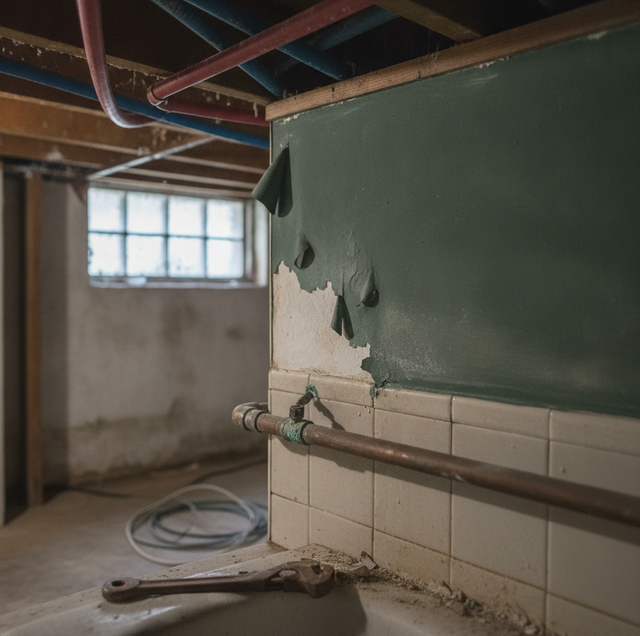
Quick Answer: Bathroom paint peels in humid climates because moisture works its way behind the paint film, breaking the bond. The fix is not more paint—it's ventilating the room, prepping the surface properly, and using a mildew-resistant satin or semi-gloss paint.
Peeling Is Adhesion Giving Out
A coat of paint holds because it has bonded to the layer beneath it. Break that bond, and the paint has nowhere to go but off the wall. In a bathroom, the thing that breaks the bond is water, and it does not have to arrive as a visible drip. Water vapor is small enough to pass through a paint film and reach the surface underneath, where it collects, softens the bond line, and lifts the coating from behind. That is why bathroom peeling so often starts as a bubble rather than a flake: vapor has pushed the film away from the wall before any edge tears free. Once a blister opens, its edges give the next round of moisture an easy way in, and the failure spreads outward from there.
Two Ways Water Reaches the Wall
A humid-climate bathroom feeds the wall from two directions, and it helps to keep them separate because they call for different defenses.
The first is condensation. Warm, vapor-heavy air off a hot shower meets a wall or ceiling that is cooler, and the vapor turns back into liquid water on that cooler surface, the same way a cold drink beads up on a warm day. That film of water sits directly on the paint and finds any pinhole, hairline crack, or worn edge to slip behind. The second is the standing humidity of the outdoor air itself, which keeps the room's surfaces damp between showers so they never fully dry. Add the two together, and the wall spends most of its time wet or nearly wet, a load ordinary living-room paint was never built to carry.
| Moisture source | What it does |
|---|---|
| Shower steam and condensation | Liquid water forms on cool walls, seeps behind the film |
| Standing outdoor humidity | Keeps surfaces damp, slows drying between uses |
| Weak or missing ventilation | Holds humid air in the room longer |
| Moisture trapped in the wall | Pushes the coating off from behind |
Drying the Room Before You Blame the Paint
Because the failure begins with water reaching the wall, the strongest move is to get the humid air out before it can condense. An exhaust fan that vents to the outside, not into the attic or a wall cavity, pulls shower steam out of the room while you bathe. Run it during the shower and leave it going for another twenty to thirty minutes afterward, since the air stays saturated well past the last rinse and the walls need that window to shed their moisture. Sizing matters too: a fan rated for the room's square footage moves enough air to actually clear it, while an undersized or clogged unit only hums. If there is no fan, a cracked window and an open door help, but a vented fan is the piece that consistently keeps the wall dry enough for paint to survive.
Prep and Product Are the Rest of the Fix
Ventilation lowers the load; the coating and the surface under it decide whether the paint holds anyway. Reach for a paint made for bathrooms and high-moisture rooms, one built to resist mildew, and put it on in satin or semi-gloss rather than flat. The higher sheen leaves a tighter, less porous surface that sheds water and wipes clean, where a flat finish drinks moisture and traps it. Just as important is what happens before the brush touches the wall. Scrape away every bit of loose and lifting paint, let the surface dry completely, and prime with a mildew-resistant or stain-blocking primer so the topcoat bonds to something sound and sealed instead of to a failing layer. Paint is only as secure as the surface it grips, and a good primer is what turns a patched, damp-prone wall back into a surface paint can trust.
What Holds Up in a Humid Bathroom
A humid climate keeps the air heavy nearly the whole year, so a bathroom here rarely gets the dry stretch that lets a wall recover. Surfaces start damp, dry slowly, and give shower condensation more time to work behind the film, which is why a finish that might limp along in a dry climate peels quickly in humidity. None of that changes the recipe; it just raises the stakes: vent the steam, coat the walls with a mildew-resistant satin or semi-gloss over a properly prepped and primed surface, and the paint has a real chance to hold up in a climate that keeps the room damp month after month.
Frequently Asked Questions
It earns its place, but for a specific reason. Paints sold for bathrooms and kitchens carry a mildewcide additive that discourages the surface mold that feeds on damp film, and many are formulated with 100 percent acrylic binders that stay flexible and cling to a wall through repeated wet-dry swings better than a cheaper vinyl-acrylic. If a wall has a history of mildew, you can also ask a paint counter to add a mildewcide booster to a compatible base. What the label will not do is overpower a wall that stays soaked, so treat the additive as insurance on top of ventilation and prep, not a substitute for either.
It does, and the mechanism is condensation rather than the humidity number by itself. Vapor only turns back into liquid water when it touches a surface cooler than the surrounding air, so an exterior wall or an air-conditioned ceiling that runs cooler than the shower air collects water first and peels first. That is why the cool corners of a bathroom often fail while a warmer interior wall in the same room holds a little longer.
Match the fan's rated airflow, measured in CFM, to the room. A common rule of thumb sizes a standard-height bathroom at roughly one CFM per square foot, so an eight-by-ten room wants about 80 CFM, and tall ceilings or an enclosed shower stall push that number up. Undersized or dust-clogged fans hum without clearing the air, so a unit that is correctly rated and vented all the way outside is what matters. Run it during the shower and keep it going another 20 minutes afterward, since the walls stay saturated well past the last rinse; a simple timer switch makes that automatic instead of something you forget on the way out.
For a wall that has peeled before, yes. New paint bonds to the surface it lands on, and a bathroom wall carries three things that block a bond: gloss, soap film, and mold. Scuff-sand or degloss any existing semi-gloss so the fresh coat has tooth to grip. Wash off the invisible soap scum and body-oil residue with a degreaser, since paint slides off a slick surface. If dark speckling is present, treat and kill the mildew, then seal it under a mold-resistant or stain-blocking primer so it cannot bleed through. Skip any one of those, and even the right bathroom paint peels again, because the failure was never the paint; it was the surface under it.
Yes, and skipping it is the most common reason a repaint fails fast. New paint can only grip as firmly as the layer beneath it, so coating over loose, lifting paint means the fresh film is anchored to something already letting go, and it drags off with the old layer within a season. Scrape back to a stable edge, feather the transition smooth, let it dry, and prime, so the topcoat bonds to solid material rather than to failure.
Dark speckling or a musty smell where the paint bubbles means mold has taken hold on the damp surface, and painting over it seals the problem in rather than solving it, because the coating will not bond to a living film, and the growth continues underneath. Treat and kill the mildew first, let the area dry fully, then prime with a mildew-resistant primer before recoating. Fixing the ventilation matters here, too, since mildew returns wherever the surface stays wet.
What It Comes Down To
Bathroom paint peels in humid climates because water vapor keeps reaching the wall behind the film, from shower condensation on cool surfaces and from air that stays damp long after the water is off, until the bond gives out and the coating blisters and flakes. More coats of the same paint only restart the clock. Getting the humid air out with a vented fan, prepping and priming down to a sound surface, and finishing in a mildew-resistant satin or semi-gloss is the combination that keeps a wall dry enough and gripped tight enough to stop the cycle for good.
If your bathroom paint keeps peeling no matter how often you redo it, we can prep and paint it to withstand the humidity. Vinicio Painting serves Hialeah Gardens, Miami Lakes, and Doral. Call (866) 444-1226.
