
Why Mildew Keeps Growing on Your Painted Walls
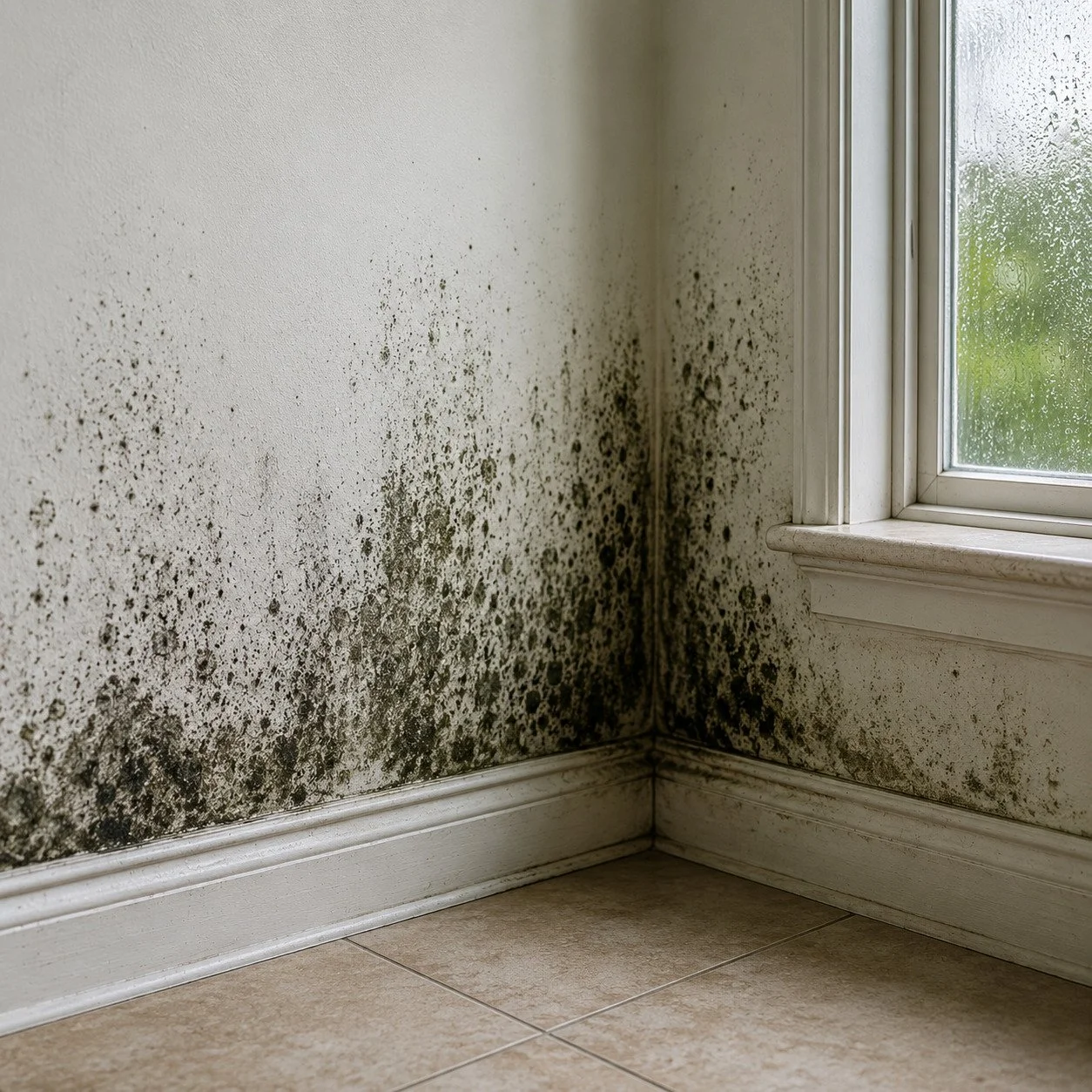
Quick Answer: Mildew grows on painted walls where it finds moisture, warmth, and poor airflow — exactly what humid Florida provides. It shows up as black, gray, or greenish spots, often in damp, humid, or poorly ventilated spots like bathrooms, kitchens, exteriors, and shaded walls. The causes are high humidity, moisture from leaks or condensation, lack of ventilation, and paint without mildew resistance. Getting rid of it for good means cleaning the existing mildew, fixing the moisture and airflow problem behind it, and repainting with quality mildew-resistant paint and proper prep. Cleaning alone won't stop it from returning.
Those black or greenish spots creeping across a wall aren't just dirt — they're mildew, and in humid Florida, they're a constant battle. You can wipe them off, but if they keep coming back, it's because the conditions that grow them are still there. Mildew isn't random; it grows where moisture, warmth, and still air meet, and Florida supplies all three. Understanding why it grows on your painted walls is the key to getting rid of it for good, rather than just cleaning it again and again.
Mildew Grows Where Conditions Favor It
Mildew is a form of mold, and like all mold, it needs specific conditions to grow: moisture, warmth, and poor airflow. Where those three come together, mildew takes hold; where they don't, it struggles. Florida's climate provides warmth and humidity in abundance year-round, so the missing ingredient is often just a damp, still spot — a poorly ventilated bathroom, a shaded exterior wall, an area near a leak. That's why mildew shows up where it does. And it's why cleaning it off without changing those conditions never works for long: the spot is still moist, warm, and still, so the mildew simply returns. Stopping it means addressing the conditions, not just the stains.
Why It Shows Up Where It Does
Mildew appears as black, gray, or greenish spots or patches, and it favors the dampest, least-ventilated areas. Indoors, that's often bathrooms (showers add moisture), kitchens, laundry areas, and any room with poor airflow or near a moisture source. Outdoors, shaded walls that stay damp and don't dry in the sun, and surfaces exposed to constant humidity, are prime spots. Areas near leaks, condensation, or standing moisture grow it readily. So the pattern of mildew on your walls is really a map of where moisture lingers, and air doesn't move — and those locations point to what needs fixing.
The Causes Behind It
High Humidity
Florida's constant high humidity keeps walls and air damp, providing the moisture mildew needs. In a humid climate, this is the underlying driver, especially on surfaces that don't dry out.
Moisture From Leaks or Condensation
A plumbing or roof leak, or condensation in humid conditions, adds localized moisture that feeds mildew in specific spots. Persistent dampness from a moisture source is a common cause of recurring mildew in one area.
Poor Ventilation
Without airflow, moisture lingers, and walls stay damp, creating ideal mildew conditions. Bathrooms and rooms without good ventilation are classic trouble spots because the moist air has nowhere to go.
Paint Without Mildew Resistance
Paint that lacks mildew-resistant properties offers no defense, so mildew grows on it more readily, particularly in damp areas. Quality paint with mildew resistance helps fight growth where the climate encourages it.
| Cause | Why it grows mildew |
|---|---|
| High humidity | Keeps walls and air damp |
| Leaks or condensation | Adds localized, persistent moisture |
| Poor ventilation | Moisture lingers, walls stay damp |
| No mildew-resistant paint | No defense against growth |
How to Get Rid of It for Good
Because mildew comes back when the conditions remain, getting rid of it permanently takes more than cleaning. The approach has three parts. First, clean the existing mildew off the surface so you're starting fresh. Second — and most important — fix the moisture and airflow problem behind it: repair any leak, address condensation, and improve ventilation in damp areas so the wall can dry and stay dry. Without this step, the mildew returns no matter how well you clean. Third, repaint with quality mildew-resistant paint over a properly prepped surface, which gives the wall a finish that resists regrowth. Cleaning treats the symptom; fixing the moisture and ventilation, and using the right paint addresses the cause. For recurring mildew, especially tied to a leak or a chronically damp area, a professional can help identify the moisture source and repaint properly so it stops coming back.
Recurring mildew can be a sign of an underlying moisture problem — a hidden leak, condensation, or chronic dampness — that needs fixing, not just painting over. If mildew keeps returning to the same spot, look for the moisture source behind it. Painting over mildew without addressing the moisture just lets it grow back through the new paint.
Frequently Asked Questions
Because the conditions that grow it are still there. Mildew needs moisture, warmth, and poor airflow, and if you clean it off without changing those — fixing the dampness and improving ventilation — the spot remains moist, warm, and still, so the mildew simply returns. In humid Florida, warmth and humidity are constant, so a damp, poorly ventilated area will keep growing mildew. Stopping it for good means addressing the moisture and airflow behind it, not just wiping away the stains.
In the dampest, least-ventilated areas. Indoors, that's often bathrooms, kitchens, laundry areas, and rooms with poor airflow or near a moisture source. Outdoors, shaded walls that stay damp and don't dry in the sun, and surfaces exposed to constant humidity, are prime spots. Areas near leaks, condensation, or standing moisture grow it readily. The pattern of mildew on your walls maps where moisture lingers and air doesn't move, which points to the conditions that need fixing.
Not effectively. Painting over mildew without addressing the moisture and ventilation behind it just lets the mildew grow back through the new paint, because the conditions feeding it remain. To stop it, you need to clean the existing mildew, fix the underlying moisture problem, improve airflow, and then repaint with quality mildew-resistant paint over a properly prepped surface. Painting over it alone treats the symptom while ignoring the cause, which is why the mildew returns.
Yes, as part of the solution. Quality paint with mildew-resistant properties gives the wall a finish that resists mildew growth better, which helps in a humid climate that encourages it. But paint alone isn't enough if the moisture and ventilation problem remains — mildew can still grow where it's persistently damp. Mildew-resistant paint works best when combined with fixing the moisture source and improving airflow, so the conditions are addressed, and the paint provides added defense against regrowth.
It can be. Mildew that keeps returning to the same spot often points to an underlying moisture problem — a hidden leak, condensation, or chronic dampness — that needs to be found and fixed, not just painted over. The recurring growth is a clue that the moisture source behind it should be investigated. Addressing that underlying problem, along with improving ventilation and using mildew-resistant paint, is what stops the mildew for good, rather than fighting the same spot over and over.
Fix the Conditions, Not Just the Stains
Mildew grows on painted walls where moisture, warmth, and poor airflow meet — and humid Florida supplies all three, so the damp, still spots in a home become mildew's home too. Cleaning the spots never lasts because the conditions remain. Getting rid of it for good means cleaning the mildew, fixing the moisture and ventilation problem behind it, and repainting with quality mildew-resistant paint over proper prep. Recurring mildew can even signal a hidden leak worth tracking down. Address the cause, not just the stains, and the walls stay clear for the long term.
Mildew keeps coming back on your walls? — Get the moisture source addressed and walls repainted with mildew-resistant paint by a Miami painting team. Vinicio Painting serves Hialeah Gardens, Miami Lakes, Doral. Call (866) 444-1226.
