
How to Restore a Faded Garage Door Without Replacing It
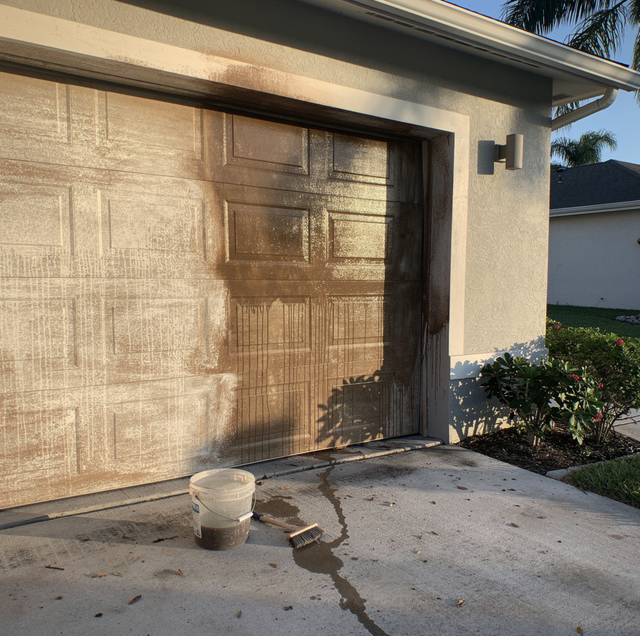
A garage door that's gone chalky, faded, or streaked with a fine white powder gets written off more often than it deserves to be. Homeowners spot that dusty residue, or a flat, sun-bleached color where a rich finish used to be, and assume the door itself is failing and needs to be hauled away. In most cases, the door is fine. The finish on top of it is what gave out, and a finish can be restored.
Why Garage Doors Fade and Chalk in the First Place
That powdery residue is called chalking, and it occurs because ultraviolet light slowly breaks down the resin binder that holds pigment particles to the paint surface. As the binder degrades, pigment grains lose their grip and sit loose on top, which is what rubs off on your hand. A door facing full sun for most of the day chalks faster than one shaded by a tree or an overhang, because it's simply absorbing more UV energy over the same number of years.
Steel doors and wood doors fade for related but slightly different reasons. A factory-finished steel door usually leaves the plant with a baked-on enamel cured at high heat, which bonds tighter than a brush-applied coat ever will; once that factory layer breaks down, though, any touch-up paint applied afterward is field-applied and ages faster. Wood doors fade because UV also attacks lignin, the compound that gives wood its structure and color, turning the surface gray and rough-grained under the paint film long before the paint itself fails.
What Restoration Actually Involves
A proper restoration is not a single coat over the old finish. It starts with a wash, using a mild detergent and a soft brush to remove chalking residue, dirt, and mildew spores, since paint applied over loose chalk just sits on top of that powder and peels off in sheets within a season. A simple chalk test tells you how bad it is: wipe a dark cloth across a dry section of the door, and if pigment transfers heavily, the surface needs a deglossing wash or a light abrasive pass before anything else touches it.
From there, the steps differ by material but follow the same logic: remove what has failed, treat what's exposed, and then rebuild the coating.
Rust spots on steel: Any orange bleed-through gets ground or sanded back to bare metal, then treated with a rust-converting or zinc-rich primer before topcoat, since painting over active rust just traps moisture under the new film and the rust keeps spreading beneath it.
Soft or rotted wood: Punky wood is dug out and filled with an epoxy wood filler rather than standard wood putty because epoxy fillers cure hard and bond to sound wood, instead of shrinking and cracking the way softer fillers do over time.
Bare or previously bare panels: Any spot down to raw steel or wood gets a dedicated primer matched to that substrate before the finish coat goes on, since skipping primer on bare material is the single most common reason a fresh repaint fails again within a year or two.
Once the surface is sound, two coats of a 100% acrylic exterior paint go on, not one, because a single coat rarely builds enough film thickness to block UV from reaching the substrate again. Seams between panels and around windows get a flexible exterior caulk first, since garage doors expand and contract daily as they heat and cool, and a rigid filler there just cracks and lets water in behind the new paint.
Steel, Wood, and Fiberglass Doors Don't Restore the Same Way
Steel doors hide their worst damage at the bottom edge and around panel seams, where standing water and road debris sit longest. That's where rust starts, often from the inside of the panel out, so a door that looks fine from a few feet away can still need grinding at those specific spots.
Wood doors require the most labor because the grain itself must be addressed. Heavily weathered wood may need sanding down past the gray, UV-damaged layer to reach sound fiber, then a stain-blocking primer to even out old and new wood before paint or stain goes on.
Fiberglass doors rarely need a full repaint. Most fiberglass panels use a gelcoat finish that fades and dulls with UV exposure but doesn't chalk the same way painted steel does; a light compounding and a fresh coat of exterior-grade finish often brings the shine back without stripping anything.
Aluminum-clad doors need their own primer as well, typically a self-etching or aluminum-specific primer rather than the product used on steel, since standard metal primers formulated for ferrous surfaces often don't bond well to aluminum's naturally oxidized surface. Skipping that step is a common reason a repaint on an aluminum door peels in small flakes within the first year, even when the rest of the prep was done correctly.
When Restoration Beats Replacement
Restoration makes sense when the panels are still straight, the rust hasn't perforated all the way through the steel, and the springs, cables, and opener are working the way they should. In that scenario, the door's structure is sound, and only the surface has failed, which is exactly what a repaint fixes.
Replacement becomes the better call when a panel is visibly bowed or dented beyond what a repaint would hide, when rust has eaten through the steel rather than just sitting on the surface, or when wood rot has spread beyond what patching and epoxy filler can reasonably cover. The garage door's spring and cable system is a separate, high-tension mechanism, and any issue there is a job for a garage door technician rather than a painting crew, regardless of what's happening with the finish.
Choosing a Sheen and Keeping the New Finish Looking Right
Garage doors typically get a satin or semi-gloss acrylic finish rather than a flat sheen, since higher-sheen finishes shed dirt and resist scuffing better, and they're easier to wipe down without leaving a mark. Flat finishes on a garage door tend to chalk sooner because the binder film sits closer to the surface, with less protection against UV breakdown, while a satin or semi-gloss film holds pigment beneath a tighter, more UV-resistant layer.
A simple maintenance habit stretches that finish much further: rinsing the door every few months with a garden hose and a mild detergent removes airborne grit, pollen, and grime before it embeds in the paint film, which slows the return of chalking far more than most homeowners expect from something so basic. It's also worth keeping a labeled container of the matched color and sheen on hand, since a garage door takes more dings and scrapes from bikes, sports equipment, and car doors than almost any other exterior surface, and a touch-up applied within days of a fresh scratch blends in far better than one applied after the bare spot has already started to rust.
Frequently Asked Questions
A properly prepped and painted steel door with two coats of 100% acrylic exterior paint typically holds its finish for 7 to 10 years before needing another repaint, compared to 3 to 5 years for a single thin coat applied without addressing chalking first.
Yes, as long as the existing layers are still bonded tightly and not flaking. A quick adhesion check, pressing a piece of tape onto the surface and pulling it off, tells you whether old paint is lifting; if more than a small amount comes off with the tape, those loose layers need to be scraped or sanded away before repainting.
Yes. Darker colors absorb more UV and infrared energy than lighter ones, so a dark bronze or black door can chalk and fade noticeably faster than a white or light gray door finished with the same paint line.
A rust-converting primer contains tannic acid or a similar compound that reacts with iron oxide to form a stable, paintable compound, so it can go directly over light surface rust. A standard metal primer is meant for bare, rust-free steel and won't stop corrosion that's already active underneath it.
The track, rollers, and hinges are usually left unpainted or only lightly touched up, since paint on the track can gum up the rollers' movement, and the hinges need to retain their factory lubrication rather than be sealed under a paint film.
Beyond the hand-wipe test, look at how rain behaves on the door: chalky surfaces cause water to sheet off in streaky, uneven patterns rather than bead, and that streaking is a reliable visual sign that the surface needs a deglossing wash before any primer goes on.
Restoring a garage door is really about reading what the surface is telling you before you touch it, whether it's just tired paint, active rust, or wood that's gone soft underneath. Get that diagnosis right, and the two or three extra prep steps pay for themselves many times over in how long the new finish holds.
Schedule a garage door restoration estimate — get an honest read on whether to repaint or replace. Vinicio Painting serves Hialeah Gardens, Miami Lakes, and Doral. Call (866) 444-1226.
