
Which Paint Sheen for Each Room? The Right Call
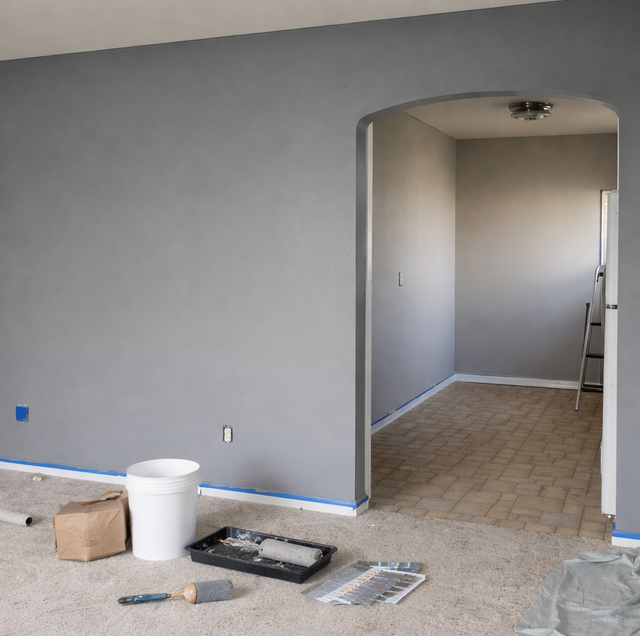
Quick Answer: Lower sheens (flat, matte) hide wall imperfections but are harder to scrub. Higher sheens (satin, semi-gloss, gloss) wipe clean and shrug off moisture but reveal every bump and roller mark. Match the sheen to how the room gets used: flat on ceilings, matte or eggshell in low-traffic living spaces, satin or semi-gloss where hands and water hit the walls, and semi-gloss or gloss on trim and doors.
Two people can buy the exact same gallon of "warm gray" and end up with walls that look nothing alike. The color on the chip is identical. What separates them is sheen, the amount of light the dried film bounces back. Get the sheen right, and a room feels finished. Get it wrong and you either scrub a wall that will not come clean, or you spotlight every dent the drywall crew left behind.
Sheen is the single decision most people skip when they pick a color, and it quietly controls three things you will live with for years: how easily the wall cleans, how it handles moisture, and how much it hides or reveals surface flaws.
Reading The Sheen Scale From Flat To Gloss
Sheen runs on a scale from dead flat to mirror gloss, and the names sit in a predictable order. Manufacturers measure it as gloss units, but you do not need a meter. You need to know the order and what each step buys you.
Flat (matte): almost no light reflection. Reads soft and velvety. Hides more surface flaws than anything else on the scale, which is exactly why it goes on ceilings and less-touched walls. The tradeoff is cleanability: scrub a flat wall hard, and you can burnish a shiny spot into it or lift a little color.
Eggshell: a hint of luster, like the shell of an egg. This is the workhorse for interior walls. It still hides most minor imperfections but takes a gentle wipe without complaint.
Satin: a soft, pearl-like glow. More washable than eggshell and more moisture-tolerant, which is why it earns its keep in busier rooms. It starts to show flaws that eggshell would have quietly buried.
Semi-gloss: clearly reflective. Sheds water and grime and holds up to repeated wiping. It also throws a spotlight on any dent, patch, or uneven sanding underneath, so the surface prep has to be honest.
Gloss: the hardest, most reflective, most washable finish. It looks almost wet. Reserved for surfaces that get touched, cleaned, and abused: doors, railings, sometimes cabinets. On a flawed surface it looks like a hall of mirrors.
The Tradeoff You Are Actually Choosing
Every sheen decision is the same tension pulling in two directions. Higher sheen means a harder, tighter film that repels water, resists scuffs, and cleans up with a damp cloth. Lower sheen means a more porous, light-scattering film that swallows imperfections but drinks up dirt and resists scrubbing.
A satin wall behaves like the finish on a kitchen countertop, a smooth surface where a splash beads up and wipes away, but any scratch in that surface catches the light and shows. A flat wall is the opposite: forgiving to look at, unforgiving to clean.
That is the whole game in one sentence: the more washable and moisture-resistant you make a wall, the more it reveals; the more forgiving you make it, the harder it is to keep clean. Once you internalize that, the room-by-room choices stop being guesswork. You are simply asking two questions in each space. How much abuse do the walls take? And how good is the surface underneath?
There is no single "best" sheen, only the right one for the job the wall has to do.
Matching Sheen To Each Room
Ceilings: flat. A ceiling sits under raking light from windows and fixtures, which means any sheen at all will highlight seams, roller laps, and framing shadows. Flat scatters that light and keeps the plane looking even. Ceilings also get touched almost never, so cleanability barely matters. Dedicated ceiling paint is flat for exactly this reason.
Living rooms, dining rooms, and bedrooms: matte or eggshell. These walls get looked at far more than they get touched. You want the flaw-hiding of a low sheen and the calm, non-reflective look that makes a room feel restful. Matte gives the richest color depth. Eggshell is the safer pick if there are kids, pets, or the occasional need to wipe a smudge, because it takes light cleaning without burnishing.
Hallways, stairwells, and kids' rooms: eggshell or satin. Traffic changes the math. Hands drag along hallway walls, backpacks scrape the corners, and kids' rooms meet crayon and sticky fingers. Step up to eggshell at minimum, satin if the wall really takes a beating, so you can scrub a mark without wearing a dull halo into the paint. Satin's slightly tougher film is the tradeoff for accepting that it shows a bit more of the wall's texture.
Kitchens: satin or semi-gloss. Cooking throws grease, steam, and splatter onto walls, and those walls need to wipe down without breaking a sweat. Satin handles most kitchen walls well. Semi-gloss makes sense on a backsplash-adjacent stretch or a spot behind the stove that sees the most spatter, where you want maximum washability. Because kitchens are moisture-prone year-round, not just in one season, lean toward the more washable end regardless of the room's usual humidity.
Bathrooms: satin or semi-gloss. Showers and sinks keep bathroom air damp, and a tighter, higher-sheen film resists the moisture film that lets mildew take hold. Satin is fine for a powder room; semi-gloss is the stronger call for a full bath with a shower. A note that matters: a higher-sheen bathroom paint resists the surface film mildew grows on, but it does not fix a moisture problem inside the wall. If paint keeps peeling or dark spots keep returning, there is a leak or ventilation issue behind the surface, and no sheen cures that. Fix the source first.
Trim, doors, and cabinets: semi-gloss or gloss. These surfaces get grabbed, kicked, cleaned, and bumped more than any wall. They need a hard film that takes handling and wipes clean, and the crisp reflection of a higher sheen also frames a room, letting white trim pop against a matte wall. Semi-gloss is the standard for baseboards, casings, and doors. Gloss goes on where durability and shine both matter, like a front door or a cabinet face. The catch is that these are the surfaces where prep shows most, so they get sanded smooth before the finish coat.
Why One Color Looks Like Two Different Colors
Pick a color, then paint one board in flat and another in semi-gloss from the same can. They will not look the same. Higher sheen reflects more light back at your eye, which reads as brighter and can appear slightly lighter, while also deepening shadows and making the color feel more saturated in direct light. Lower sheen scatters light in every direction, muting the color and reading softer and often a touch lighter in a flatter, chalkier way.
This is why a color that looks perfect on a matte wall can feel harsh or "off" in semi-gloss on the trim beside it. It is also why testing a color in the actual sheen you plan to use, on the actual wall, beats trusting the little chip. The chip is printed in one finish, and your wall will not match it unless the sheen matches too. Sample in the real sheen, and look at it in daylight and at night.
Good painting is a chain of small correct decisions, and sheen is one of the easiest to get wrong because the color conversation drowns it out. Slow down on it, and the room rewards you.
Test a color in the actual sheen you plan to use, on the actual wall, rather than trusting the little chip, which is printed in one finish. Higher sheen reads brighter and more saturated while lower sheen mutes the same color, so sample in the real sheen and look at it in daylight and at night.
Frequently Asked Questions
Yes, and it is common practice. Painters routinely put the wall color in eggshell or matte and the same or a complementary color on the trim in semi-gloss. The sheen difference alone creates a subtle frame between wall and woodwork without needing a second color. Just be aware the trim will read slightly different in tone because of how the higher sheen bends light, so choose the trim shade with that shift in mind.
On surfaces that get handled or washed, yes, because the tighter film resists abrasion and repeated cleaning better than a flat one. But higher sheen does nothing to slow ultraviolet fading and can actually make chalking or surface defects more visible as a finish ages. On a low-touch ceiling, a flat finish can outlast a glossier one visually because there is no scrubbing to wear it and no reflection to expose age.
Flat, hands down, followed by matte. A dead-flat finish scatters light so evenly that patches, skim-coat ridges, and nail pops nearly disappear. If a wall has never been properly finished to a smooth level and you cannot re-skim it, a flat or matte finish is your best cover. The moment you go to satin or above, that same wall will telegraph every flaw under side lighting.
Several manufacturers now sell "scrubbable" or "matte" lines engineered with tougher resins so a flat-looking wall can take light cleaning. They close some of the gap, though they still will not match a true semi-gloss for repeated hard scrubbing or standing moisture. Treat manufacturer washability claims as a starting point, not a guarantee, and keep the highest-splatter zones like a stove wall in satin or above.
It can be worth considering. Strong raking light from a big window acts like a spotlight across the wall, so a higher sheen in a sun-flooded room will exaggerate every roller mark and drywall seam far more than in a dim room. In bright, side-lit rooms, many painters drop a step in sheen to keep the surface reading smooth. This holds true whether the sun is a summer glare or a low winter angle, so it is a year-round consideration, not a seasonal one.
Much more, and this is where jobs succeed or fail. Higher sheens exaggerate anything underneath, so a semi-gloss or gloss demands a sanded, filled, uniformly primed surface or it will look blotchy and highlight every defect. Flat and matte are forgiving enough to cover minor prep sins. Sealing new drywall or patched areas with primer also evens out porosity so the final sheen dries uniformly instead of flashing dull in spots.
Not sure which sheen fits each room in your home — get a walkthrough that matches finish to how you actually live. Vinicio Painting serves Doral, Coral Gables, and Miami. Call (866) 444-1226.
