
What’s Involved in a Commercial Paint Job, Start to Finish
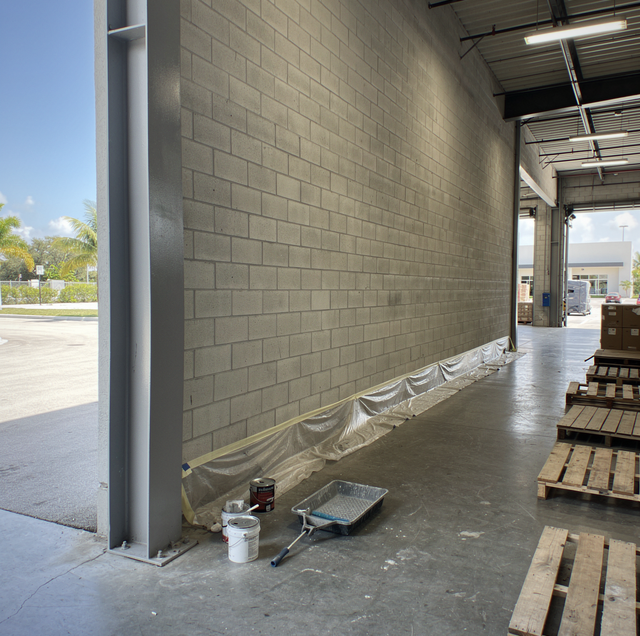
A commercial paint job and a residential one might look similar from the outside; both involve rollers, brushes, and a crew moving from wall to wall, but the planning underneath them is built around a different set of constraints. A business can't simply close for three days the way a homeowner might vacate a bedroom, and a warehouse or retail space brings surfaces, traffic, and coating demands a typical house never sees.
How a Commercial Job Differs From a Residential One
| Factor | Residential Painting | Commercial Painting |
|---|---|---|
| Access and equipment | Ladders, standard extension poles | Scaffolding, lifts, or swing stages for high walls and atriums |
| Coating systems | Standard interior and exterior acrylic latex | Epoxy, urethane, or elastomeric coatings matched to traffic and substrate |
| Scheduling | Full access during the workday | Off-hours, weekend, or phased work around business operations |
| Surface variety | Mostly drywall and trim | Concrete block, metal stud framing, structural steel, drywall, and flooring in one project |
| Coordination | One household's schedule | Property managers, multiple tenants, and sometimes a general contractor |
Scoping the Job: Walkthrough, Surface Count, and Access Needs
Every commercial project starts with a walkthrough that's more detailed than a typical home estimate, because the surfaces involved usually aren't uniform. A single building might combine painted drywall in the office areas, exposed concrete block in a stairwell, and structural steel columns in a warehouse bay, and each of those substrates needs its own prep method and coating. The walkthrough also maps out access: a two-story atrium or a warehouse with 20-foot ceilings needs scaffolding or a mechanical lift, not the extension ladders that cover most residential exteriors.
Choosing Coatings Built for Commercial Wear
Commercial spaces put far more mechanical stress on a painted surface than a home does. Hallways and stairwells see constant foot traffic and equipment bumping the walls, so many commercial jobs specify a higher-build epoxy or urethane coating on lower wall sections, sometimes applied as a wainscot band, specifically because those coatings resist scuffing and cleaning chemicals better than standard acrylic latex. Warehouse floors often get an entirely separate epoxy floor system, since foot and forklift traffic wears through ordinary floor paint within months. Occupied office buildings frequently call for low-VOC, low-odor formulations as well, since people are working in the space while the coating cures, unlike an empty house where off-gassing has time to dissipate before anyone moves back in.
Scheduling Around a Working Business
Scheduling is where commercial work departs most from residential work. Rather than one continuous job from start to finish, commercial painting is usually phased by zone, one wing, floor, or department at a time, so the rest of the business keeps operating. Work often shifts to evenings, overnight, or weekends specifically to avoid disrupting customers or staff during business hours, and a detailed schedule gets shared with the property manager or business owner ahead of time so each area knows exactly when it will be affected.
Prep Work That Takes Longer on Commercial Surfaces
Concrete block and poured concrete need more prep than drywall, typically a masonry primer or block filler to seal the porous surface before any topcoat, since uncoated concrete pulls paint in unevenly the same way raw drywall compound does. Structural steel columns and beams need rust treatment and a corrosion-inhibiting primer before finish coats, since bare or lightly coated steel in a warehouse setting corrodes faster than steel in a conditioned home. All of that surface variety adds time to the prep phase that a simple drywall-and-trim residential job doesn't require.
What a Realistic Timeline and Documentation Process Looks Like
A commercial project typically starts with a written scope that covers every surface type, coating system, and color, since multiple stakeholders (a property manager, tenants, and sometimes a general contractor) need to sign off on the plan before work begins. Larger jobs are broken into a punch list at the walkthrough stage and closed out with a final walkthrough once painting wraps, confirming that every item on the list was addressed. That documentation step matters more on commercial work than residential work simply because more people, and often more square footage, are involved in signing off on the finished result.
Safety, Access, and Keeping Tenants Informed
Working at height in a commercial space brings safety practices a residential job rarely needs: commercial crews follow fall-protection protocols, like harnesses and guardrails, on scaffolding or lifts when working above ground level, along with care around any electrical panels or mechanical equipment near the work area, and containment barriers or plastic sheeting to keep dust and overspray away from retail merchandise, office equipment, or food-service surfaces. Crews working overnight or on weekends also need a way to secure the site between shifts, since a half-finished commercial space left open overnight is a different liability than a homeowner's garage.
Communication with tenants and staff matters just as much as the physical barriers. Signage marking wet paint and closed sections, plus a heads-up notice a day or two before work starts in a given zone, keeps foot traffic away from curing surfaces and avoids smudged handprints landing in a fresh coat before it's had time to set.
Color, Branding, and Long-Term Maintenance Planning
A commercial repaint often involves more than picking a color that looks good; the color and finish also need to withstand whatever maintenance schedule the property will actually follow. A property manager overseeing several buildings typically wants a single, consistent, well-documented color and coating system across similar spaces, so touch-ups are easy to match and a future repaint doesn't require redoing the color selection from scratch. Corporate or franchise locations frequently specify an exact brand color by formula rather than by a generic swatch name, since even a slight shift in a mixed color becomes noticeable across a chain of similar storefronts.
Because commercial spaces typically get repainted less often than the average home, often five to eight years apart depending on traffic and lease turnover, the coating chosen at the outset needs to hold its color and finish for that entire stretch, rather than being touched up every year or two the way a busy household hallway might be.
Coordinating With Other Trades on an Active Site
On a renovation or a new build-out, painting rarely happens in isolation. Painters typically follow rough electrical and drywall work but come in before final flooring goes down, since paint drips and overspray are far easier to clean off a subfloor than off finished carpet, tile, or vinyl plank. Coordination with an electrician matters too: outlet and switch covers usually come off before painting and go back on after, and a painter working around live panels or exposed wiring defers that area to the electrician rather than taping over anything still in use. On sites with IT or data cabling crews running new lines through the ceiling grid, painters typically wait until the cabling is roughed in, since repositioning cable trays after a fresh paint job risks scuffing or gouging the just-cured finish.
What a Solid Walkthrough Estimate Actually Covers
A thorough commercial estimate goes well beyond a square-footage number. It typically breaks the space into zones (lobby, corridors, individual offices, warehouse bays) and lists the substrate, condition, and coating system planned for each one, since a single flat rate rarely reflects how much prep varies between a freshly built office suite and a decades-old stairwell with peeling alkyd paint underneath. The estimate should also flag anything that could stall the schedule once work starts: suspected lead-based paint in an older building, where testing before sanding is a recommended precaution, water staining that points to a roof or plumbing issue that should be fixed before repainting over it, or areas where existing coatings are incompatible with the new system and need a full strip rather than a scuff-and-recoat.
A clear estimate also states who's responsible for moving furniture, protecting flooring, and removing wall-mounted fixtures like signage or shelving, since commercial spaces often have far more built-in fixtures than a house does, and disagreements about who handles that work are a common source of delay once a crew is already on site.
Frequently Asked Questions
Yes, and swapping them causes early failure: a masonry primer applied to bare steel doesn't bond to the smooth surface and tends to peel within months, while a zinc-rich metal primer applied to porous block doesn't fill the surface voids the way block filler does, leaving a pitted, uneven topcoat.
Work is typically broken into zones tied to lease boundaries, so one tenant's space is completed and reopened before the crew moves to the next unit, and common areas like lobbies or stairwells are often scheduled for evenings or weekends when foot traffic is lowest.
That band, called a wainscot, typically runs about 42 to 48 inches up from the floor, roughly the height at which most contact and scuffing happens from carts, equipment, and hands, and it's often finished in a contrasting color partly, so scuffs show up against a surface meant to be touched up rather than a wall meant to stay pristine.
When a formula is on record, matching is simple. The harder case is a building with no paint history at all, where a painter has to color-match visually or send a chip out for computer matching, and even a close match can read slightly off in sheen or tone until the whole wall gets a fresh coat rather than just the patched section.
There's no single universal requirement, but many building managers request it anyway. Worth noting: some low-VOC formulations need an extra coat or a longer recoat window to build the same film thickness as a standard product, so a tight turnaround schedule should account for that difference rather than assuming a low-odor coating applies exactly like a standard one.
Most two-part epoxy floor systems require roughly 24 hours for light foot traffic and several days for full vehicle or forklift traffic, since the coating needs time to fully cross-link and reach its rated hardness, not just feel dry to the touch.
Commercial painting isn't just a bigger version of a home repaint. It's a different set of decisions from the first walkthrough onward: which coating actually holds up to the traffic in that space, how the schedule protects a business that can't simply shut its doors, and how the paperwork keeps everyone on the same page once the crew packs up.
Request a commercial painting walkthrough and scope—a project plan tailored to your business hours. Vinicio Painting serves Hialeah Gardens, Miami Lakes, and Doral. Call (866) 444-1226.
