
What Ceiling Cracks and Stains Are Really Telling You
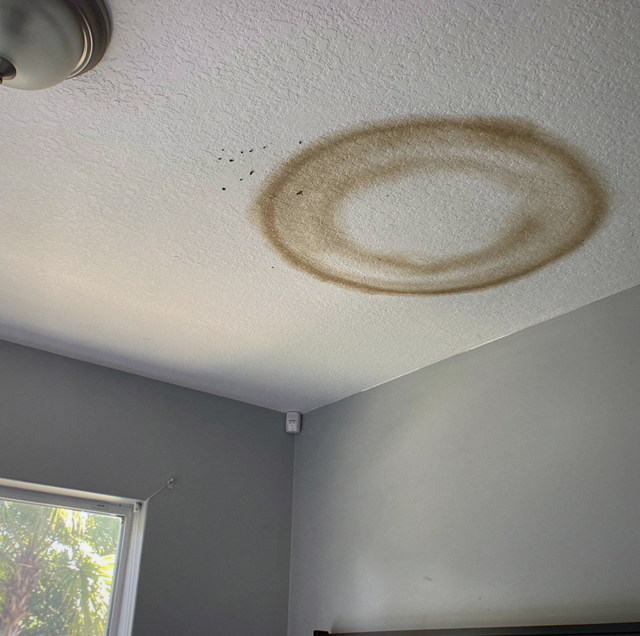
A ceiling rarely fails all at once. It shows small, specific signs first, and each one tells you something different about what's happening beneath the surface you can see.
Why Trusses and Framing Movement Cause Seasonal Hairline Cracks
The most common ceiling crack, a thin line running along where the ceiling meets an interior wall, usually has nothing to do with the drywall itself. Roof trusses expand and contract as temperature and humidity shift between the attic and the living space below, and the top and bottom chords of a truss don't always move at exactly the same rate. That mismatch, sometimes called truss uplift, can lift the center of a ceiling ever so slightly relative to the walls it's fastened to, which opens a hairline gap at the seam. It tends to show up more in colder months, when attic and indoor temperatures diverge the most, then close back up partway as conditions even out, which is why the same crack can seem to come and go with the seasons. A crack that instead radiates outward from a corner, rather than running straight along the seam, usually points to a different cause: the framing or foundation settling unevenly rather than simply flexing with the seasons, and that pattern is worth having a professional look at rather than treating it like an ordinary truss-uplift crack.
| What You See | What It Usually Means | How Urgent It Is |
|---|---|---|
| Thin, hairline crack along a wall-ceiling seam | Normal seasonal framing movement | Low; monitor, patch if it bothers you |
| Brown or yellow ring stain | Past or active water intrusion above | Moderate to high; find the source before painting over it |
| Sagging or bulging section | Drywall saturated with water, losing strength | High; needs prompt attention |
| Yellowing across a whole ceiling | Aging oil-based paint, old stain-blocking primer, or nicotine residue | Low; cosmetic, needs the right primer to repaint |
| Bubbling or peeling paint | Moisture trapped behind the paint film | Moderate; find and stop the moisture source first |
| Cracks radiating out from a corner | Possible structural settling | Moderate to high; worth a professional look |
Why Water Stains Form That Distinctive Ring Shape
A water stain almost never shows up as an even, solid patch. It spreads out from the point of intrusion and dries into a ring, darker at the outer edge than in the center, for the same reason a spilled cup of coffee leaves a ring on a countertop: as water evaporates from the drywall's surface, it carries dissolved minerals and tannins outward to the edge of the wet area, where they concentrate and dry in place. A fresh stain with a soft, damp edge usually means the leak is still active; an old, sharply defined ring with no dampness left generally means the source has already been fixed, but the stain itself needs a shellac-based or oil-based stain-blocking primer before repainting, since ordinary latex paint alone won't stop tannins from bleeding right back through.
Sagging Ceilings: When Drywall Has Taken On Too Much Moisture
Drywall's core is gypsum sandwiched between two layers of paper, and that paper facing is what actually holds most of the panel's structural strength. Repeated soaking from a slow leak weakens the paper's bond to the gypsum core over time, and eventually the screws or nails holding the panel up start to pull through the softened paper rather than grip it. A ceiling that visibly sags or feels spongy when you press on it from below has usually reached that point, which means the affected section of drywall needs to come down and be replaced rather than simply dried out and repainted, since compromised paper doesn't regain its original strength once it dries.
Stopping a Stain From Bleeding Back Through the New Paint
Painting straight over a water stain with ordinary ceiling paint almost always fails within weeks, because standard latex paint is water-based and the tannins in the stain are water-soluble; the new paint essentially redissolves a thin layer of the old stain and pulls it up to the surface again. A dedicated stain-blocking primer, either shellac-based or an oil-based alkyd formula, seals the stain with a film the tannins can't dissolve through, and it needs to fully cure before the topcoat goes on for that seal to hold.
Repairing the Crack Itself: Tape, Compound, and Why Flexibility Matters
For a hairline seasonal crack, the seam is typically reopened slightly, refilled with a setting-type joint compound rather than standard all-purpose compound, and covered with either paper tape or self-adhesive fiberglass mesh tape before a final skim coat. Paper tape generally resists cracking better on a flat, stable seam, while mesh tape is faster to apply but needs that setting-type compound underneath to have a real shot at resisting the same seasonal movement that caused the crack in the first place. A repair that skips the setting-type compound and relies only on standard compound over mesh tape is one of the more common reasons the same hairline crack reappears within a year. Matching texture is its own separate challenge on an older ceiling: hand-applied knockdown or a hopper-gun orange-peel pattern has to be replicated at roughly the same texture size and density as the surrounding ceiling, or the repaired section reads as a slightly smoother or rougher patch even after the color coat evens everything out.
How a Painter Reads a Ceiling Before Ever Opening a Paint Can
A capable painter checks a stained or cracked ceiling before assuming it's ready for a fresh coat. A moisture meter pressed against the drywall near the stain gives a reading well above normal if water is still present, even when the surface looks and feels dry to the touch, since drywall can hold elevated moisture for weeks after a leak stops. Pressing gently at several points around a stain also tells you how far the damage has spread beneath the surface; drywall that flexes or feels slightly spongy even an inch or two past the visible stain usually needs to be cut back further than the discoloration alone would suggest.
That check matters because painting over a ceiling that's still holding moisture, even with a stain-blocking primer, only delays the problem. The primer might block the tannins from showing through, but trapped moisture behind a sealed film can still support mold growth or eventually blister the new paint from underneath, which is why confirming a leak has actually stopped, not just assuming it has because the stain looks old, is the first real step in any ceiling repaint.
Frequently Asked Questions
Yes, especially if the ceiling drywall was fastened rigidly to the top of the interior walls when it was built. Beyond redoing the tape and compound, some crews stop a chronically reopening seam by refastening the ceiling drywall a few inches back from the wall intersection with clips that let it float independently of the top wall plate, which keeps the truss movement from transferring into the seam at all.
Old yellowing from an aged oil-based paint, a shellac-based primer, or nicotine residue built up from years of indoor smoking can all bleed amber discoloration through a fresh coat of ordinary latex ceiling paint, so a stain-blocking primer is generally still the safer first step even when there's no visible stain, just overall yellowing.
A roof-related stain typically appears near an exterior wall or a ceiling area under a roof valley or vent penetration, often after heavy rain, while a plumbing-related stain usually shows up beneath a bathroom, kitchen, or a second-floor fixture and may appear regardless of weather.
Any visible dip of more than about a quarter inch, or a section that feels soft or springy when pressed, has generally lost enough of its paper-to-gypsum bond that drying it out won't restore its strength; at that point the panel section needs to be cut out and replaced.
Yes. Uneven attic ventilation can widen the temperature difference between the top and bottom of roof trusses, which increases truss uplift movement at the ceiling-wall seam; balancing intake and exhaust ventilation in the attic can reduce how much that seam moves each season.
A textured finish, like popcorn or knockdown texture, is more rigid and less able to flex with small seasonal movement than a smooth painted surface, so the same amount of framing movement is more likely to visibly crack a textured ceiling before it would show on a smooth one.
A ceiling's cracks and stains are really a running record of what's happening above it: framing that flexes with the seasons, water that's found its way in, or paint that's finally showing its age. Reading those signs correctly, rather than just rolling fresh paint over the top, is what keeps the same problem from recurring in six months.
Get a ceiling inspection before your next repaint — know what's causing it, not just cover it. Vinicio Painting serves Hialeah Gardens, Miami Lakes, and Doral. Call (866) 444-1226.
